
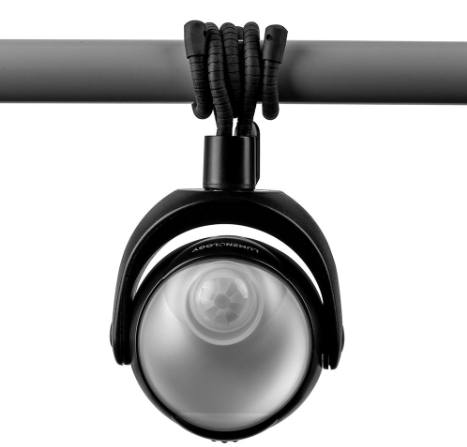
Light is often taken for granted until we find ourselves in darkness. Yet beneath the simple act of flipping a switch lies sophisticated science that determines not just brightness, but efficiency, safety, and environmental impact. Lumenology represents a new frontier in how we understand and deploy lighting technology, particularly in outdoor spaces where motion sensing, LED efficiency, and intelligent design converge to create systems that are both smarter and more responsible than traditional approaches.
The Physics Behind Motion-Activated Lighting
Motion-sensor lighting isn’t merely a convenience feature—it’s a direct application of physics designed to reduce waste while maximizing safety. When a Lumenology system detects movement through passive infrared (PIR) sensing, it triggers LED arrays that deliver precisely calibrated illumination. This approach works because human movement is both predictable and temporary. Rather than maintaining constant illumination in spaces that might remain empty for hours, motion-activated systems light only when needed, reducing energy consumption by up to 80 percent compared to always-on fixtures. The science involves understanding thermal signatures, detecting minute temperature variations that indicate living creatures, and converting that detection into triggered electrical signals that activate high-efficiency LEDs.
LED Technology and Lumen Output Science
The term “lumen” measures luminous flux—essentially the amount of visible light emitted by a source. Lumenology products are engineered to deliver specific lumen outputs matched to outdoor spaces and security needs. Modern LED technology delivers exceptional lumen output relative to power consumption, meaning a single fixture can illuminate large areas while consuming minimal electricity. The science involves understanding color temperature (how warm or cool light appears), beam angles (how light spreads across a space), and intensity (raw brightness). Outdoors, where light must compete with ambient darkness and sometimes weather, precision in these specifications becomes critical for both safety and aesthetics.
Energy Efficiency at the Systems Level
True efficiency isn’t just about using less electricity—it’s about eliminating waste across entire systems. Lumenology lighting systems incorporate multiple efficiency strategies working together. LED bulbs consume far less power than incandescent or halogen alternatives, reducing both electrical load and heat generation. Motion sensing eliminates hours of unnecessary operation. Intelligent sensitivity adjustment allows users to calibrate detection ranges, preventing false triggers that waste energy on unnecessary illumination. Timer functions can override motion sensing during daylight hours or disable sensors entirely in specific time windows. When these elements combine, the result is a system that might consume one-fifth the energy of traditional dusk-to-dawn outdoor lighting while actually providing superior illumination when it matters.
Design Considerations for Optimal Performance
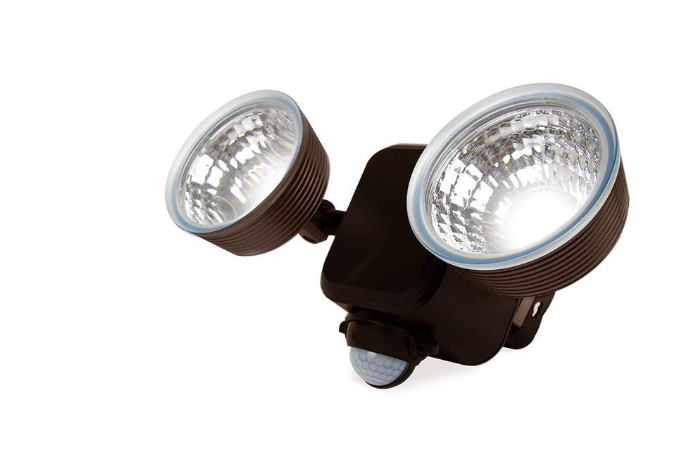
Installing outdoor lighting isn’t simply a matter of mounting fixtures and hoping for good coverage. Lumenology systems require thoughtful placement informed by understanding light behavior and human perception. Fixtures mounted at proper heights create even coverage without hot spots or dark zones. Dual-head designs—like those shown in the product lineup—allow simultaneous illumination of multiple zones from a single mounting point, essential for securing larger perimeters or covering corners. Material science matters too: UV-resistant housings withstand sun exposure, sealed electrical connections resist moisture, and durable mounting brackets handle wind loads and temperature fluctuations. The placement of motion sensors becomes critical; too close to heat sources or moving foliage triggers false activations, while poor positioning misses actual movement needing detection.
Real-World Applications Where Science Meets Safety
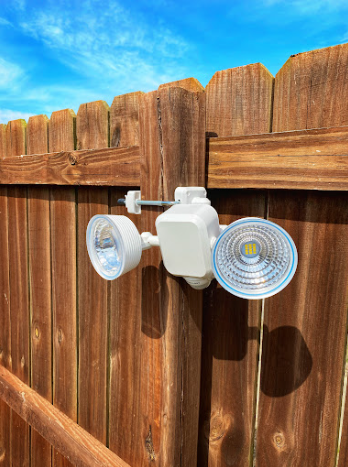
Understanding the science becomes practical when considering actual use cases. A property owner securing a back fence faces different illumination needs than someone lighting a driveway or patio entrance. Lumenology fixtures accommodate these variations through adjustable sensitivity settings, multiple head configurations, and different mounting options. A single-head fixture might suit narrow pathways, while twin-head units provide comprehensive backyard coverage. Because each light operates independently when triggered, users avoid the inefficiency of overlapping illumination from unnecessarily bright always-on systems. The fixture design itself matters—weather-resistant construction prevents premature failure in rain or frost, while finishes (typically black powder coat) minimize light spillage beyond intended areas.
The Environmental Case for Intelligent Lighting
Beyond individual property benefits, widespread adoption of motion-sensor LED lighting reduces aggregate energy consumption. Consider that billions of outdoor fixtures operate globally: traditional systems burning inefficiently every night regardless of whether anyone is present. Scaling efficient lighting systems reduces grid demands, decreases power generation requirements, and diminishes the carbon footprint of global electricity consumption. Lumenology represents that shift toward responsible outdoor illumination. By implementing motion sensing, LED technology, and user-configurable settings, the system delivers security and utility without the environmental cost of wasteful lighting practices.
- Motion sensing eliminates energy waste from unnecessary continuous illumination in unoccupied spaces.
- LED technology reduces power consumption while increasing brightness and extending fixture lifespan.
- Adjustable sensitivity settings prevent false triggers that waste power and create light pollution.
- Dual-head designs cover larger areas efficiently from single mounting points.
- Weather-resistant construction extends fixture lifespan, reducing replacement frequency and waste.
The science of light, when applied thoughtfully, transforms outdoor spaces into safer, more efficient environments.
