
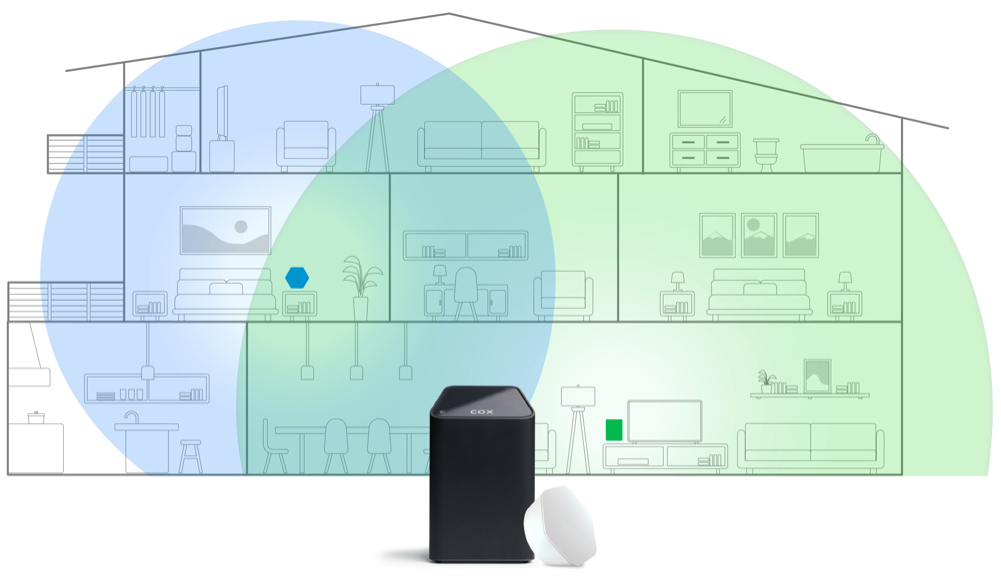
The most useful way to approach whole-home Wi-Fi coverage is to begin with the space itself. Before comparing products or booking anything, the user should note where the experience will happen, who will use it and what could make the plan inconvenient. In the case of walls, floors, furniture and distance, those details often reveal priorities that a generic buying guide misses. Cox can then be assessed as one possible route through a clearly defined problem instead of being treated as the starting point of the decision.
Map the Weak Spots Before Buying Equipment
Context changes what “good” means. rooms that repeatedly lose signal may be perfect for one person and unnecessary for another, so the goal should be to match features to a particular routine. A short written brief can be surprisingly helpful: where the item or service will be used, how often it will be used and which compromise would be hardest to accept. This turns a broad category into a manageable set of requirements and makes later comparisons more consistent.

At that point, the user can explore Cox while keeping the brief visible. The most useful information is usually found in descriptions, compatibility notes, dimensions, timing details or service conditions rather than promotional headlines. gateway placement and optional Pods should be checked carefully because it can determine whether an otherwise attractive choice works in practice. If a detail is unclear, it is safer to treat it as unresolved than to assume it will work.
Give the Gateway a Better Position
A compact checklist also makes it easier to compare unlike options. Four or five criteria are normally enough to expose the meaningful differences without turning the decision into a spreadsheet exercise. Each criterion should describe an outcome, not simply a feature. That keeps attention on how the choice will feel during real use and prevents a long list of specifications from becoming a substitute for judgement.
- Write down the two or three outcomes that matter most for whole-home Wi-Fi coverage.
- Confirm gateway placement and optional Pods before treating an option as suitable.
- Include the effect of gateway placement and optional Pods in the final comparison.
- Save the exact specification, booking details or compatibility information for later reference.
Practical fit becomes especially important when gateway placement and optional Pods. These conditions can create small inconveniences that repeat every day, which is why they deserve more weight than a feature that is used occasionally. Cox may offer several routes within the same category, but the user still benefits from checking how each option interacts with the environment. A choice that looks modest on paper can be the better everyday fit when it removes repeated friction.
Use Extenders With a Clear Purpose
Another useful test is to imagine the first week of ownership or the first day of a trip. What needs to be set up, carried, installed, charged, stored or remembered? This mental rehearsal exposes missing accessories and unrealistic assumptions. It can also highlight whether the user needs a simpler option. Convenience comes from reducing steps, not from collecting features, so every added element should have a clear reason for being there.
Price is easier to judge once the full setup is visible. Cox should be compared on the basis of the complete requirement, including any supporting products or optional services that are genuinely necessary. Buyers often discover that two apparently different prices become much closer after essentials are added. Looking at the whole package also makes it easier to decide where paying more creates a tangible benefit and where it merely changes appearance.
Keep the Network Manageable Over Time
The final target remains consistent coverage without creating unnecessary complexity. Keeping that outcome in view helps the user ignore distractions and choose with confidence. It also creates a useful standard for future changes: if the routine evolves, the same question can be asked again to decide whether an upgrade is justified. A good plan therefore works both at purchase and later, when circumstances are slightly different.

As a final discipline, the user can take a short break before committing and then reread the requirements from the beginning. Distance from the browsing process often makes unnecessary extras easier to spot. It also gives practical details such as dimensions, timings and compatibility a chance to stand out again. The best decision normally feels coherent rather than exciting: every part has a reason, every cost has been considered and the chosen option can be used without inventing new workarounds.
Before committing, Cox can be checked against the brief one final time. The user should confirm the exact model, dates, dimensions, format or other category-specific details and save the relevant information for reference. That final verification takes only a few minutes but protects the work already done. A carefully matched choice is more likely to remain useful because it was selected for a purpose rather than for a momentary impression.
